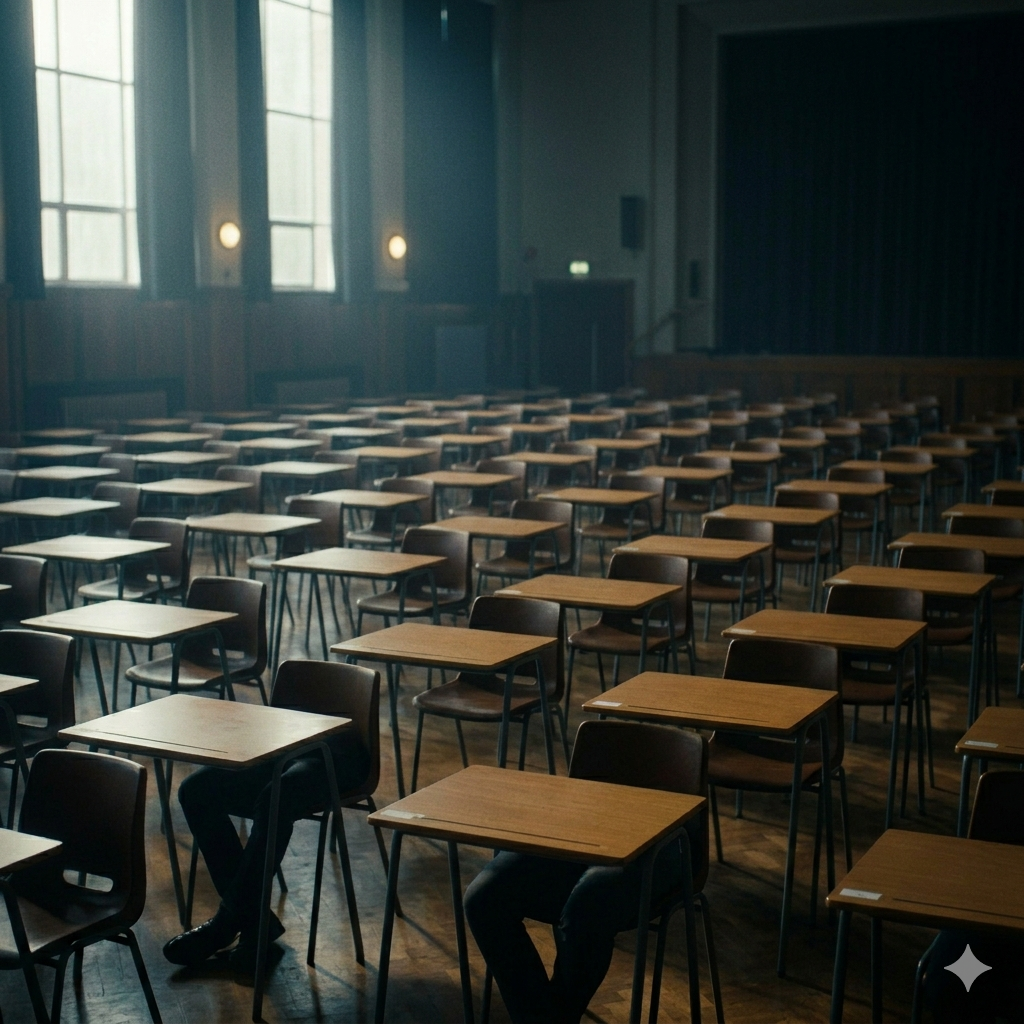
Singapore's secondary school national examinations are being restructured. From 2027, the Singapore-Cambridge Secondary Education Certificate (SEC) replaces three separate national qualifications (the O-Level, N(A)-Level, and N(T)-Level) under a single unified certificate. This guide explains the SEC exam in Singapore, the G1, G2, and G3 subject levels under Full Subject-Based Banding, and how the Integrated Programme relates to the new system.
What Is the SEC Exam?
The Singapore-Cambridge Secondary Education Certificate (SEC) is the new unified secondary school graduation certificate that replaces the GCE O-Level, N(A)-Level, and N(T)-Level from 2027. Education Minister Chan Chun Sing announced the change in Parliament in March 2024.
Before 2027, Singapore separated secondary students into three distinct tracks following Primary 6: Express (leading to O-Levels), Normal Academic (N(A)-Levels), and Normal Technical (N(T)-Levels). The SEC ends that separation entirely. Under the new system, students are no longer sorted into fixed streams. Instead, every student follows the same secondary school structure and takes individual subjects at levels that correspond to their performance in each subject.
One result of this change: all students sit a single common national examination timetable. Under the previous system, O-Level and N-Level candidates sat exams at separate times of year. That distinction is removed under the SEC.
Key Dates: Who Sits the SEC and Who Still Sits O-Levels
The year a student entered Secondary 1 determines which examination system applies to them.
| Student cohort | National exam | Certificate awarded |
| Entered Sec 1 in 2023 or earlier | O-Level / N-Level in 2025 or 2026 | GCE O-Level or N(A)/N(T) certificate |
| Entered Sec 1 in 2024 or later | SEC | SEC certificate |
Current Secondary 4 students in 2026 remain on the Express or Normal track and sit the O-Level or N-Level as applicable. Their syllabus and exam structure are unchanged.
Full Subject-Based Banding Singapore: G1, G2, and G3 Subjects Explained
The most significant structural feature of the SEC is the Full Subject-Based Banding (Full SBB) framework. Under Full SBB, subject level placement is made individually, not by overall stream. There are three levels:
G3: The most demanding level. G3 content is broadly equivalent to what the old Express/O-Level track covered. Students targeting Junior College or Millennia Institute typically take several subjects at G3.
G2: A mid-tier level, broadly comparable to the old Normal (Academic) standard. G2 is generally associated with pathways toward polytechnic and Institute of Technical Education (ITE) progression.
G1: The foundational level, aligned with the former Normal (Technical) curriculum. G1 focuses on essential skills and practical, real-world application.
Crucially, a student can take Mathematics at G3, Humanities at G2, and Design & Technology at G1 simultaneously. Subject placement is assessed and assigned individually, not dictated by a single stream label. This is what distinguishes Full Subject-Based Banding from Singapore's previous secondary school structure.
Full syllabuses for G1, G2, and G3 subjects are published on MOE's secondary school syllabus page and the SEAB website.
Integrated Programme vs SEC: Understanding Both Pathways
The SEC applies to students in mainstream secondary schools, but a parallel pathway, the Integrated Programme (IP), operates separately and is not affected by the SEC changes.
The Integrated Programme allows high-performing students to bypass the secondary school national examination entirely. IP students proceed directly from Secondary 4 to a two-year pre-university programme at a Junior College, where they sit either the GCE A-Level examinations or the International Baccalaureate (IB) Diploma.
Syllabus overlap between IP and SEC: IP schools cover roughly the same subject content as the SEC G3 syllabus at the secondary level, particularly in core subjects such as English Language, Mathematics, and the Sciences. The divergence between IP and SEC content becomes more pronounced in the upper secondary years, where IP curricula typically introduce more advanced or extended material ahead of the A-Level or IB track.
Post-secondary destination: Both SEC students (via JC or Millennia Institute entry) and IP students (via the direct IP-to-JC track) can arrive at the same A-Level or IB endpoint. The difference is the absence of a national examination midpoint for IP students.
IP places are offered by specific schools, most of which are affiliated with Junior Colleges. Entry into the IP is determined at Secondary 1 based on PSLE results and school-specific selection criteria.
Summary
The Singapore Secondary School changes taking effect from 2027 represent a structural redesign of the national examination system rather than a fundamental revision of subject content. The SEC exam replaces three separate qualifications with one unified certificate, built on the Full Subject-Based Banding framework that assigns each student to G1, G2, or G3 levels individually by subject. The Integrated Programme remains a separate pathway, with substantial syllabus overlap at the G3 level, leading directly to A-Level or IB study without a national examination at the Secondary 4 mark.
For enquiries, contact us. To browse tuition centres in Singapore, visit our directory.
For the latest official syllabus documents and the most current exam formats, always refer to the MOE and SEAB websites
Frequently asked questions
When does the SEC replace O-Level and N-Level qualifications?
The Singapore–Cambridge Secondary Education Certificate starts from the 2027 examinations, according to SEAB's SEC overview. Confirm the actual examination route with the school, especially for a student taking a different course duration or a non-standard progression route.
Do G1, G2 and G3 describe my child's overall stream?
No. They identify subject levels under Full Subject-Based Banding, rather than a single fixed label for all the student's subjects. Use the school-issued subject list when choosing materials or tuition. A general description such as 'G3 student' can hide differences between individual subjects.
Can my child change a subject level later?
Discuss the school's process, performance evidence and available support. Do not assume that a desired change is automatic or that the new level covers identical content. Ask what additional preparation would be needed and how the timetable and future pathway would be affected.
Do Integrated Programme students follow the same examination route?
The IP is a separate programme that generally does not use the secondary national examination as its midpoint. Ask the specific school about its curriculum, progression requirements and final qualification. Do not treat a generic G3 syllabus guide as the complete curriculum or promotion policy for every IP school.