Primary 5 and 6 are often when academic stress starts to build at home, as the anticipation of the PSLE looms closer and the science curriculum takes a sudden jump in difficulty. If you are looking to help your child with their PSLE Science revision or plan their study timetable, this article serves as a helpful refresher of the exact science facts they are learning in the upper block. We have outlined the core concepts covered in these years to give you a clear roadmap of the syllabus, making it easier to navigate homework questions and support their study planning (p.s. check out our article on Effective Student Time Management).
The Circle of Life (Reproduction & The Water Cycle)
The upper primary journey begins with understanding how life and resources sustain themselves over time. Knowing the specific steps of these cycles helps keep revision focused without overcomplicating the science.
- Plant reproduction: The focus here is on the exact sequence of events. Students must track plant reproduction from pollination and fertilisation (seed production) to seed dispersal and germination.
- Human reproduction: Students learn that ovaries produce eggs, testes produce sperms, fertilisation is the fusing of the two, and the fertilised egg develops in the womb. The guidelines explicitly note that foetal development details are not required.
- The water cycle: Students must identify the melting point of ice (0°C) and boiling point of water (100°C). They also need to understand the exact roles of evaporation and condensation in the environment.
When revising these topics, focus on the chronological sequence of these cycles. PSLE questions often test a student's ability to identify what happens if a specific step in the cycle is interrupted.
Complex Biological Engines (Advanced Systems)
When looking at human and plant anatomy, the curriculum introduces more complex systems that work together. Knowing the exact boundaries of what is taught prevents you from accidentally confusing your child with advanced details they aren't tested on yet.
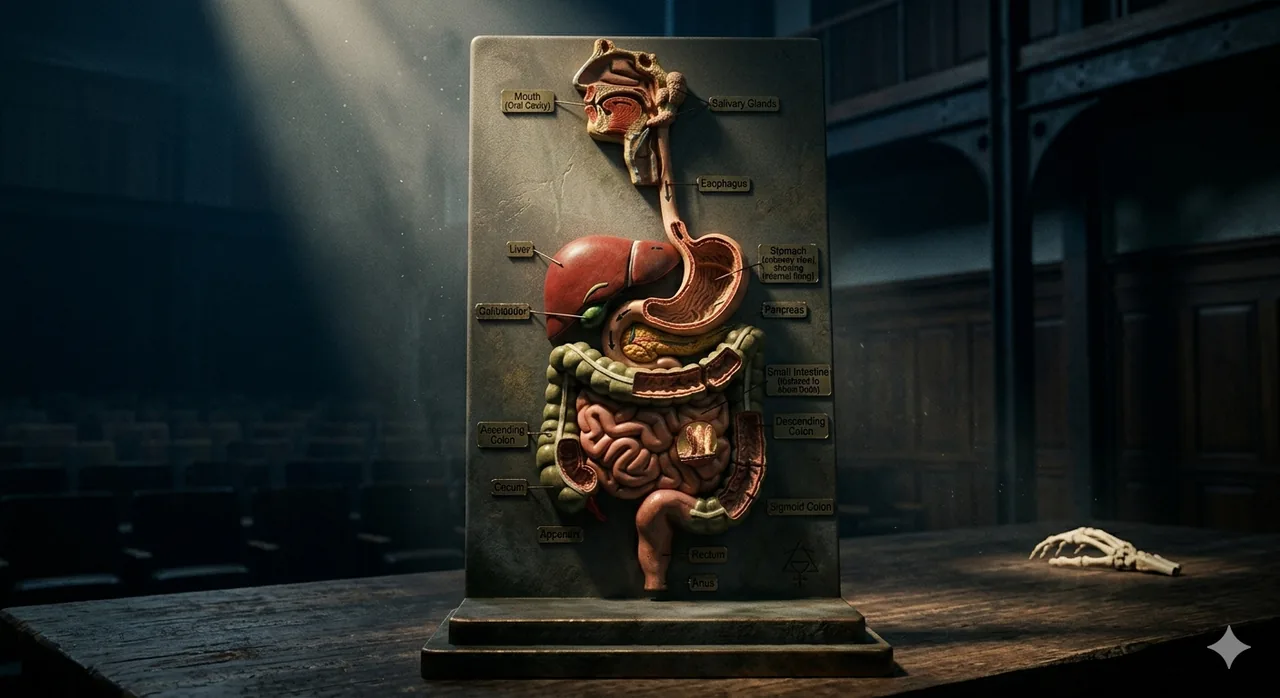
- Human systems: Students learn the parts of the respiratory system (nose, windpipe, lungs) and circulatory system (heart, blood, blood vessels). Crucially, they must understand how these systems integrate with the digestive system to carry out life processes.
- Plant systems: They learn about the plant tubes that transport food and water. However, it is explicitly stated that students do not need to memorize complex scientific terms like xylem, phloem, or stomata.
While your child will need to be able to identify basic parts on a diagram, the focus is on how different components come together. For example, how digested food from the digestive system and oxygen from the respiratory system are both transported by the circulatory system to the rest of the body.
Making Connections (Electrical Systems)
Electricity is often one of the trickiest topics for students to visualize. Understanding the basic circuit rules they are taught makes it much easier to help them troubleshoot those notoriously tricky PSLE diagrams.
- Circuit basics: Students must know that a closed circuit is absolutely required for current to flow. They must also be able to identify materials as either electrical conductors or insulators.
- Circuit variables: Students are expected to investigate how changing specific variables physically affects a circuit. They must know the difference in current and bulb brightness when arranging batteries or bulbs in series versus parallel.
If your child struggles with circuit diagrams on paper, visualizing the path of the electricity with your finger helps them spot the "gaps" in open circuits much faster than just staring at the page.
The Invisible Pushes and Pulls (Forces)
In addition to electricity, students are introduced to the broader physical forces that shape our world. Grounding these concepts in everyday actions makes it easier to explain how these invisible pushes and pulls alter the objects around us.
- The four forces: Students must definitively identify and differentiate between frictional force, gravitational force, elastic spring force, and magnetic force.
- The rules of force: They must understand the tangible effects of a force: it can move a stationary object, speed up, slow down, stop, or change an object's shape or direction.
- Defining weight: Students must learn the critical rule that an object has weight specifically because of the gravitational force acting upon it.
You can make these concepts highly concrete by pointing out forces in daily life like the friction of bicycle brakes or the elastic spring force of a stretched rubber band.
The Big Web of Life (Interactions & Adaptations)
The ecology topics require a very specific set of vocabulary. Knowing the exact definitions the school expects allows you to accurately guide your child through complex food web and habitat questions.
- Ecological definitions: The curriculum explicitly requires students to differentiate between an organism, a population (a group of the same kind living in a given place and time), and a community (many populations living together).
- Food webs: Students must trace energy pathways from the Sun through producers, consumers, predators, and prey.
- Survival tactics: They must classify animal and plant survival tactics strictly as either "structural" (physical body parts) or "behavioural" (actions) adaptations.
Using nature documentaries or a walk in the reserve is an excellent way to practice identifying whether an animal's specific trait is a structural adaptation or a behavioural one.
Powering the World (Photosynthesis & Energy Conversion)
The final major topic ties everything together by tracking how energy moves and changes. Keeping these rules of energy conversion simple gives you exactly what you need to check your child's answers during the final PSLE stretch.
- Photosynthesis: Students must know the strict formula for this process. It requires water, light energy, and carbon dioxide to produce sugar and oxygen.
- Energy conversion: Students learn to track how energy changes forms (kinetic, potential, light, electrical, sound, heat). They must recognise the fundamental concept that energy from most of our resources is originally derived from the Sun.
Practice tracking energy chains at home together, such as mapping out how a battery (potential energy) powers a toy car (kinetic and sound energy).
Conclusion
The Primary 5 and 6 science curriculum represents a major shift from basic observation to complex application. It moves logically from understanding how life reproduces and sustains itself, to how advanced bodily systems integrate, and finally to the overarching physical forces and energy conversions that govern our world.
Using this cheat sheet alongside your child's practice papers is a great way to verify definitions and ensure they don't lose easily avoidable marks on these upper block boundaries. However, remember that the PSLE tests the entire syllabus, including the foundational topics taught in the lower block. If you want to make sure those early concepts are still fresh, you can check out our companion Primary 3 & 4 Science Refresher to cover your bases.
If you are looking for structured, external guidance, we built MatchaTutor to help you explore your options. You can use our free directory to filter, compare, and connect with hundreds of tuition centres across Singapore, ensuring you find an environment that fits your child's specific PSLE preparation needs.
Frequently asked questions
Does P5 and P6 Science revision include earlier primary topics?
Keep earlier concepts available and use the current examination syllabus and school revision scope to decide what needs revisiting. Upper-primary questions can require ideas learnt earlier. Do not discard P3 and P4 notes simply because the current textbook has moved to a new topic.
Are Science answers mainly about including the right keywords?
Accurate terms matter, but they must be used in an explanation that answers the question. Ask your child to connect the relevant change with its cause and the stated result. Adding a keyword to an unrelated sentence does not repair missing reasoning.
How can I help my child understand a fair test?
Use a completed class exercise. Identify what was deliberately changed, what was measured and which conditions needed to stay the same. Then ask whether another changed condition could explain the result. Have your child justify the controls rather than memorise a list without reference to the investigation.
Do we need to carry out experiments at home?
No. Diagrams, recorded results and completed school practicals can support useful discussion. For a home activity, follow a suitable adult-supervised guide and keep it low-risk. Do not improvise with mains electricity, chemicals or hot equipment simply to reproduce a textbook demonstration.