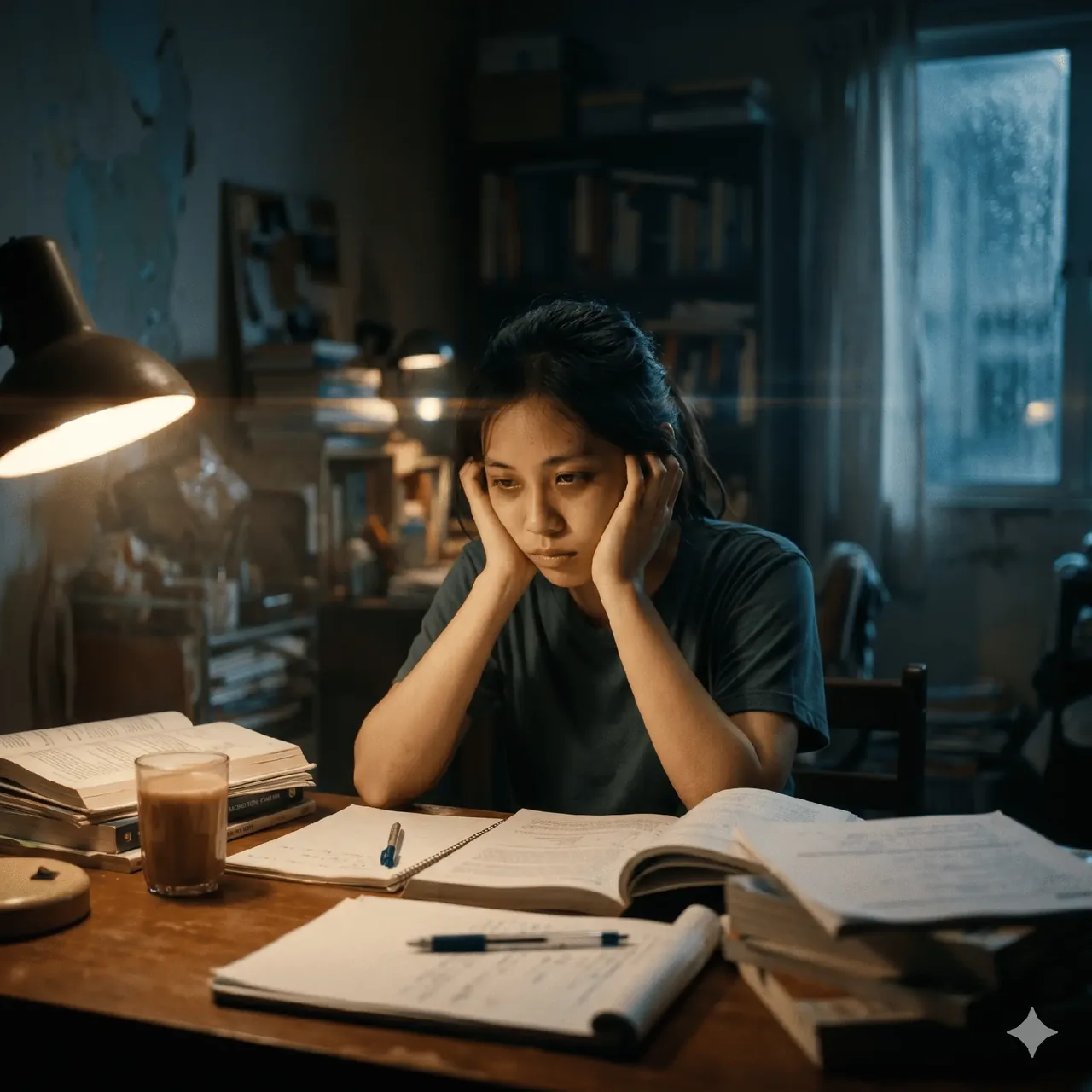
It is a common assumption that childhood depression looks like obvious sadness, frequent crying, or explosive, disruptive behavior. We naturally expect that if our children were truly struggling, the signs would be impossible to miss. However, the reality of growing up in Singapore's high-stakes, fast-paced educational environment tells a very different story. Here, distress rarely fits the textbook definition. Instead, it quietly disguises itself as Sunday night stomachaches, sudden academic apathy, or an endless cycle of scrolling on TikTok. This article breaks down the latest pediatric research on how clinical depression actually manifests in Singaporean children, and maps out how you can decode these hidden signals to better support your child.
Part 1: The Silent Struggle in Primary Schoolers (Ages 7-12)
Section 1: The "Invisible" Distress
You feel blindsided—your child’s teacher just reached out because they are unusually withdrawn in class or entirely disengaged from group work, yet they haven't acted "sad" or disruptive at home at all. Because childhood depression is highly internalizing, it rarely looks like explosive behavior. Instead, it manifests as silent emotional numbness and withdrawal that is incredibly difficult for even the most loving caregivers to detect.
- The Diagnostic Gap: According to the Singapore Youth Epidemiology and Resilience (YEAR) study, while 37.3% of adolescents self-reported clinical levels of internalizing problems, parallel parent reports identified only 15.9% of their children as struggling.
- Under the Radar: The data reveals a severe diagnostic gap where parents underestimate distress by more than half because symptoms like relentless internal self-criticism and anhedonia (loss of joy) do not disrupt household harmony.
Shift your view from assuming they are maliciously hiding things from you, to understanding that their specific type of distress is designed to be invisible, and your current radar simply needs recalibrating. Missing these signs doesn't make you a bad parent; it simply means the traditional picture of "depression" we've been taught is inaccurate for today's youth.
Section 2: The Sunday Night Stomachache
Your 11-year-old is suddenly getting severe stomachaches or tension headaches every Sunday evening, despite having no fever or physical illness. The intense, chronic pressure of national examination tracking hits children precisely as puberty begins, causing their psychological anxiety to physically manifest in the body before they have the vocabulary to express it verbally.
- Physical Manifestations of Anxiety: Primary school children frequently present with somatic physical complaints (such as unexplained chronic stomachaches or tension headaches) and high irritability, rather than traditional sadness.
- The PSLE Pressure Cooker: Mental health practitioners in Singapore note that this chronic academic stress fundamentally limits unstructured play and is actively correlated with early-onset depression and anxiety.
When this happens, try to shift your perspective from thinking "they are faking an illness to avoid PSLE homework" to recognizing that their body is physically carrying the overflow of their academic anxiety. Over the next week, observe if your child is consistently dropping previously cherished playdates or giving up instantly on minor, non-academic tasks with phrases like "I can't do this."
Part 2: Navigating the Teenage Disconnect (Ages 13-16)
Section 3: The Motivation Flatline
You try to motivate them to study or offer constructive feedback on a low grade, but they just shut down completely, stare blankly, or show profound apathy. When a child’s primary sounding board—the family—focuses exclusively on academic compliance, the child loses their safe space to process complex emotions, prompting them to suppress those feelings and detach entirely.
- The Apathy Epidemic: Recent local phenomenological research indicates that clinical depression in this age group features profound avolition—a paralyzing lack of motivation that strips the child of the cognitive and physical energy required to engage in schoolwork.
- The Cost of Invalidation: Experts emphasize that "parental invalidation", dismissing a child's emotional distress in favor of maintaining academic focus, is strongly and positively correlated with elevated academic stress and deep apathy.
When discussing grades, separate your personal anxiety about their future from their current emotional state. Validate their frustration first before moving to problem-solving. A simple way to open this dialogue is to say, "I can see you're feeling incredibly overwhelmed by this assignment right now. Let's close the books for 20 minutes and just take a walk."
Section 4: The 2X Speed Brain
Your teen seems permanently glued to TikTok, viewing videos at lightning speed, but seems completely incapable of sustaining focus on their homework for more than ten minutes. The algorithmic design of short-form media actively trains the developing adolescent brain to expect constant dopamine hits, creating severe cognitive fatigue that masquerades as "just relaxing."
- Algorithmic Overload: An innovative AI-driven study by NTU and ListenLabs.ai revealed that 15% of youths consume video content at twice the normal speed to maximize stimulation, leading to 68% reporting severe difficulties with academic focus.
- Digital Exhaustion: Prolonged, compulsive social media use directly correlates with severe emotional fatigue and behavioral patterns that closely mimic substance addiction, rather than actual social connection.
To combat this fatigue, implement a "digital sundown" policy for the whole family, where fast-paced, algorithmic media is swapped for low-stimulation activities (like reading or listening to podcasts) one hour before sleep to let their dopamine receptors reset. Keep the intervention collaborative, not punitive. Frame screen limits as a "brain rest" strategy to help them feel less tired the next day, rather than a punishment for poor focus.
Section 5: The Peer Micro-Traumas
Your teen is devastated and isolating in their room over what seems like a minor, easily fixable squabble with a friend group. During adolescence, the brain’s locus of psychological importance shifts from the family unit to peer relationships, meaning social comparisons and minor peer rejections are processed by their brain as major survival threats.
- The Accumulation of Stress: Qualitative phenomenological research reveals that clinical depression in teens rarely stems from a single catastrophic event, but rather a gradual, insidious build-up of multiple micro-stressors and problematic peer interactions.
- The Comparison Trap: Data indicates that youths facing marginalized identities or intense social comparison on digital platforms experience deeply compounded psychiatric risks and severe depressive symptomatology.
Instead of viewing the situation as "just silly middle school drama," understand that their developing brain is currently wired to prioritize peer validation above logic, and this feels like a genuine crisis to them. Understanding this peer-focused brain chemistry is the exact reason why teens rarely come to adults for help when they are struggling—which makes knowing how to safely open that door all the more critical.
Conclusion: Reframing the Academic Journey
In a highly rigorous educational landscape, the signs of student distress are rarely loud; they are quiet, complex, and deeply interwoven into their daily routines. Whether it is an unexplained stomachache before a Monday morning or a sudden, impenetrable wall of apathy toward their grades, these behaviors are not signs of laziness or defiance. They are structural responses to overwhelming pressure and cognitive fatigue. By recalibrating our expectations and using the science to decode their behavior, we can shift from a dynamic of frustration to one of collaborative support.
If your child's current academic environment is contributing to this friction, finding the right educational support shouldn't add to your stress. We built MatchaTutor.sg to serve as a free, transparent directory to help you filter, compare, and understand over 1000 tuition centres and private tutors in Singapore.
Frequently asked questions
How can I tell whether my child is depressed or having a difficult week?
Look for changes that persist or interfere with ordinary life, rather than deciding from one bad day. Low mood, loss of interest and changes in sleep or functioning merit attention. HealthHub's child and teen depression guide explains the signs; diagnosis requires professional assessment.
Can headaches or stomach aches be a sign of depression?
They can have many causes and do not establish depression or anxiety. Do not dismiss recurring symptoms as an excuse to avoid school. Arrange a medical review and describe any accompanying changes in mood, sleep or attendance, so physical and emotional concerns can both be considered.
What can I say when my child does not want to talk?
Choose a quiet moment and describe what you have noticed without criticism: 'You haven't wanted to do things you used to enjoy. How have things been?' Listen without demanding an explanation immediately. HealthHub recommends supportive, non-judgemental responses, rather than telling a child to snap out of it.
Where can a Singapore parent start seeking help?
Speak to your child's doctor or school counsellor and explain the changes you have noticed. For round-the-clock mental health support and help finding services, Singapore's national mindline 1771 is another starting point. It does not replace emergency care when there is immediate danger.