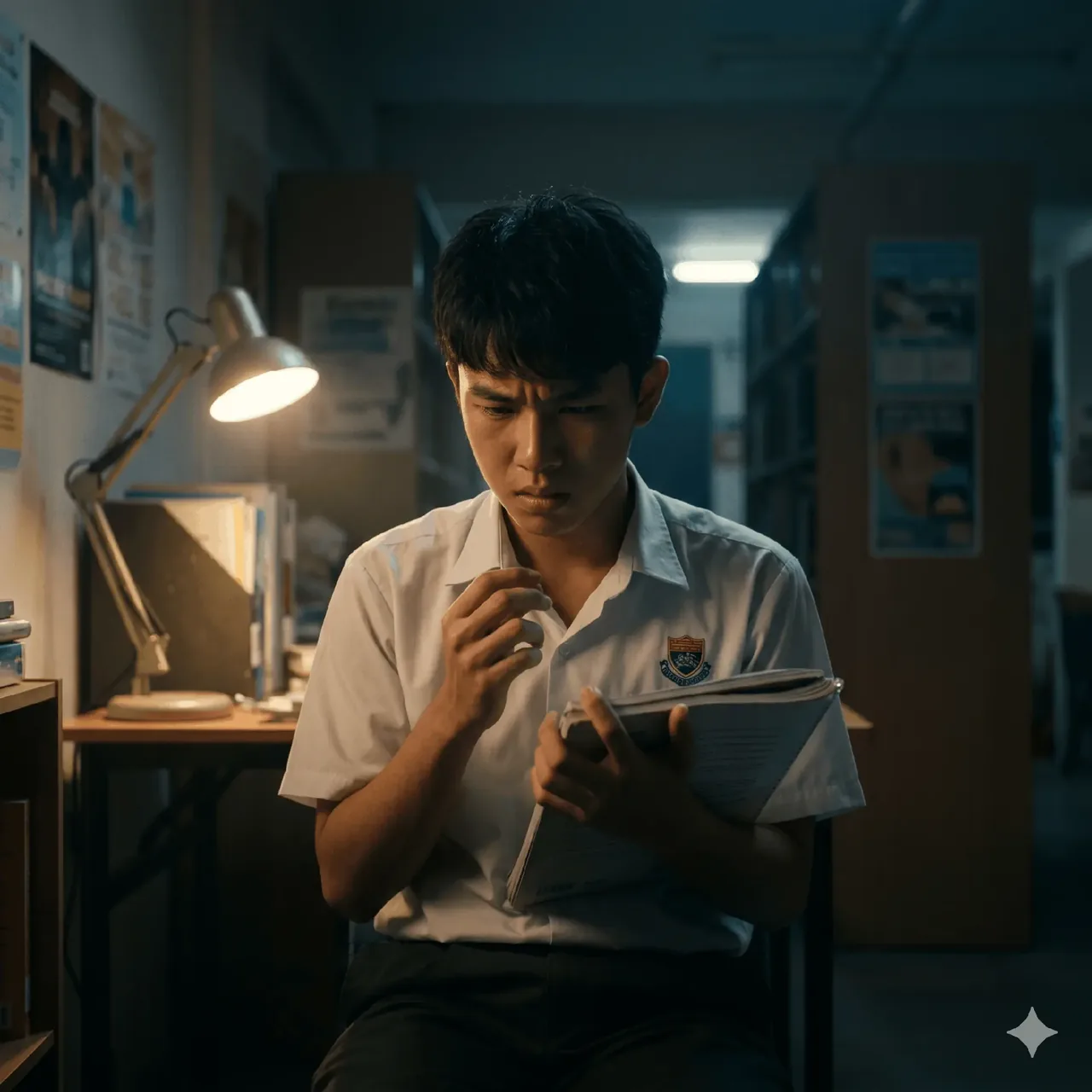
If you are reading this, you are likely already worried that your child is carrying more academic stress than they should. You might be watching them closely, wondering if their irritability, sudden withdrawal, or unexplained stomachaches are just a passing phase, or signs of something deeper. The reality of childhood anxiety in Singapore is often much quieter than loud panic attacks or outright school refusal. Beneath the surface of daily routines, pediatric mental health data shows a growing number of students experiencing covert, chronic distress that directly impacts their academic stamina and biological development. This article breaks down how anxiety commonly manifests across different developmental stages in Singaporean children and maps out practical ways parents can actively support their child through these invisible hurdles.
The Primary School Years (Ages 7 to 12)
Ages 7-10 (Lower/Mid-Primary): The Physical Disguise of Early Anxiety. For younger children just entering the formal school system, anxiety rarely has the vocabulary to express itself verbally, choosing instead to manifest through the body.
- The perception gap: Local epidemiological data reveals a stark 21.4 percent discrepancy between children reporting internal distress and parents actually noticing it. This happens because young children usually lack the emotional literacy to say "I am anxious"; instead, they complain of unexplained stomachaches, headaches, or simply become unusually quiet.
- The danger of covert symptoms: Clinical researchers note that because these internalizing symptoms do not disrupt the household or classroom like a behavioral tantrum or hyperactive outburst does, they are easily missed. The anxiety is allowed to build undetected until it breaches a critical threshold.
Instead of waiting for obvious behavioral outbursts, paying close attention to these subtle physical complaints and validating their worries early on can prevent these quiet stressors from snowballing.
Ages 11-12 (Upper Primary): The PSLE Crucible and Conditional Approval. The PSLE arrives exactly when a child's developing brain is most sensitive to social standing; if they feel your love and approval are tied strictly to their grades, their nervous system treats the exam like a survival threat.
- Developmental collision: The developmental overlap of puberty and high-stakes national streaming fosters chronic stress, actively suppressing vital opportunities for the biological rest and identity exploration required at ages 11 and 12.
- The weight of expectations: Developmental psychologists identify "Perceived Academic Conditional Positive Regard" as a major driver of clinical anxiety. This occurs when children internalize the terrifying belief that parental affection is entirely dependent on their academic output.
Consciously separating a child's intrinsic worth from their test scores and explicitly praising their daily effort over their final results remains the most effective psychological shield you can provide during the demanding PSLE year.
The Secondary School Transition (Ages 13 to 16)
Ages 13-14 (Lower Secondary): The Transition Shock and Pedagogical Friction Moving to secondary school means transitioning away from a classroom where a single core teacher handles most pastoral care, drastically diluting the adult safety net they are used to.
- Anticipatory vulnerability: Longitudinal analyses by local educational researchers identify the primary-to-secondary transition as a critical period, with "anticipatory anxiety" (worrying heavily before the move) strongly predicting long-term emotional problems throughout secondary school.
- The autonomy gap: There is a documented friction during this phase where secondary school systems suddenly demand high degrees of independent studying and self-regulation. However, research into teacher perceptions reveals that educators frequently view incoming Secondary 1 students as immature. This creates a stressful gap: the system demands immediate adult-level independence, but the child still requires heavy emotional scaffolding. Feeling expected to "just know" how to handle it unintentionally exacerbates the teen's feeling of inadequacy and isolation.
Recognizing this sudden demand for academic and emotional independence allows you to step in as a collaborative guide, helping them process these complex new academic expectations rather than assuming they should just know how to manage it.
Ages 14-16 (Upper Secondary): The Digital Schoolyard Today’s teenage conflicts are rarely left on the physical schoolyard; digital connectivity means that a youth faces 24/7 exposure to social stress, completely removing the traditional safety of the home.
- The new nature of exclusion: Independent surveys reveal approximately 30 percent of secondary students report experiencing bullying, but the nature of this harassment has shifted. It is now heavily skewed toward relational exclusion like being intentionally kicked out of group chats or subjected to rumor-spreading rather than physical altercations.
- Inescapable digital stress: Educational data from the PISA 2022 framework confirms that "extreme Internet users" face a significantly higher risk of school refusal and acute anxiety due to this constant, inescapable digital exposure.
Given this compounding timeline of academic and digital stressors, actively training emotional resilience at home is far more effective than simply hoping your teenager naturally develops a thick skin.
Proactive Support at Home and in School
Mental toughness is a highly trainable skill. If you are noticing signs of chronic distress, you do not need to navigate it alone. Support is structurally built into both your home routines and the Singaporean school system:
- Support at home (The MOE Framework): You can easily mirror the Ministry of Education’s CCE "I Am, I Can, I Have" framework right at the dinner table. Building their "I Can" mindset is as simple as explicitly praising their problem-solving efforts. Reminding them of their unconditional family support network solidifies their "I Have" foundation. Data shows this sense of personal control acts as a powerful cognitive shield against anxiety.
- Support in school (Counseling and REACH): If anxiety begins to genuinely impair your child's sleep, eating, or daily life, lean on school resources early. MOE schools are equipped with trained counselors who use cognitive-behavioral techniques to help students dismantle catastrophic thought patterns. For more complex cases, the community-based REACH program brings expert psychological help directly into the school, successfully treating the vast majority of cases without the child ever needing a hospital visit.
Given the realities of childhood anxiety, the most effective support is not waiting for children to “grow out of it,” but building steady emotional safety at home and knowing when to use the help already available through school.
Managing the Journey
The journey through Singapore’s education system is undeniably rigorous, but understanding how anxiety manifests at each developmental stage empowers you to act as a crucial buffer. From recognizing the quiet, physical complaints of a primary schooler to navigating the complex social expectations of a teenager, your role evolves from vigilant observer to collaborative guide. By separating their intrinsic worth from their academic output and partnering with school resources when necessary, you can help them navigate these years with confidence rather than chronic distress.
If you noticed your teenager is withdrawing due to peer dynamics, we highly recommend reading our Parent's Guide on Understanding Soft Bullying to learn how to help them navigate the digital schoolyard.
And if part of easing their academic stress involves finding a learning environment that better matches their pace, MatchaTutor is here to help. As a free directory with over 1000 listings across Singapore, you can easily filter and compare tuition centres with all the information you need to make the best choice for your child.
Frequently asked questions
When does ordinary worry need professional attention?
Seek advice when worry is persistent, hard to manage or disrupting school, sleep, friendships or everyday activities. A parent does not need to establish a diagnosis first. NIMH describes anxiety disorders in terms of their ongoing impact, rather than whether a child looks calm to other people.
How can I reassure my child without dismissing the worry?
Acknowledge the feeling before offering a solution: 'That sounds worrying. Which part feels hardest?' Work out one manageable next step together and ask what support would help. Avoid promising that nothing difficult will happen or turning the conversation into a test of whether the fear is reasonable.
Should I assume a school-day stomach ache is anxiety?
No. Recurrent pain needs appropriate medical attention, even when it occurs before school. Tell the doctor about the timing and any other symptoms, and separately ask the school about difficulties your child has mentioned. Do not use the pattern alone to rule out a physical cause.
Who should I speak to when anxiety affects school attendance?
Contact the school counsellor or form teacher and your child's healthcare professional. Share the pattern, triggers and support already tried, then agree on a coordinated plan. WHO's anxiety guidance describes effective treatments; persistent difficulties should not be managed simply by forcing attendance without assessment.